

Rubona
NAEB
Mib04
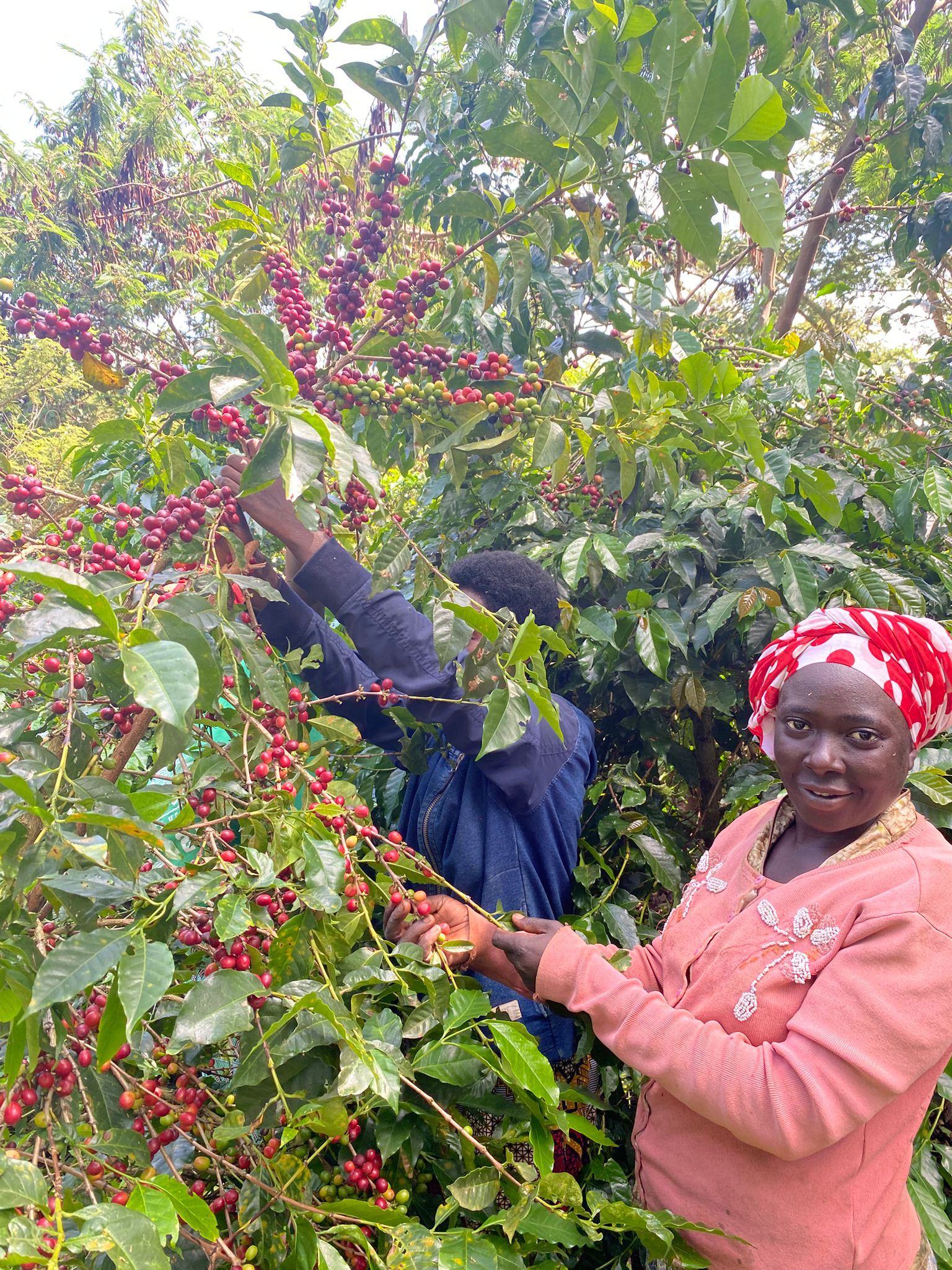
The RAB Rubona research station in Huye District, at 1,666 metres above sea level, where Mibirizi was selected in the 1950s and where it has been under evaluation since 2021 as one of seven JICA CUP2 experimental sites in collaboration with NAEB and RAB. What sets this lot apart is the processing. Instead of being pulped, the deep-red ripe cherries were hand-sorted to remove defective fruits, then dried whole on raised beds, turned regularly and covered at night and during rain, over several weeks of slow drying until the required moisture content was reached. The result is a natural that layers ripe fruit sweetness over Mibirizi's large beans and characteristic elegance.
General Information
About the Farm
Behind this lot stands the CUP2 Project (implemented by JICA,
NAEB and RAB), which has managed the Rubona coffee plots for 5
years. Rubona is where Rwandan coffee research begins: the station
carried out the selection work on Mibirizi in the 1950s, and it is
where the variety was kept alive after farmers abandoned it for
selections better able to withstand leaf rust and coffee berry
disease.
Since 2021 the agronomist and field officer were deployed by the
JICA Coffee Value Chain Strengthening Project to find out what
Mibirizi can really do when it is properly cared for. Mibirizi
coffee trees were planted and monitored over three seasons, and
every element of husbandry was recorded: fertilizer splits in
October, January and April, organic manure at the onset of the
rains, lime where the soil turned acid, mulch laid before the dry
season, shade trees kept at about 40 percent cover, and pests
scouting regularly.
The answer was emphatic. Rubona became the highest-yielding of the
seven sites, reaching 6.93 kg/tree in 2026, while its cup score
reached 89 points. The natural process was added to test how far
the variety's fruit character could be taken, and this lot is what
that experiment produced.
The team's ambition now reaches well beyond its own fence line.
Rubona has been designated the mother seed garden for Mibirizi,
supplying seed to the certified nurseries that will raise seedlings
for a new generation of Rwandan producers. A variety that almost
vanished is being handed back to the farmers who first grew it.
